
Beyond the Code: The Real-World Side of Location Data Science
Great location models require more than code. See how Geolytix’s Data Scientists step away from their screens to bring real-world context to data.


I’ve always found that it’s much easier to understand the role of a Data Scientist when you see it sitting at the intersection of a Venn diagram combining four disciplines: statistics, programming, communication and business. The first two are obvious and communication is then needed to explain the findings and articulate value to the end user. The final element of ‘business’ is easily overlooked, but is vital for ensuring models make sense when applied in the real world.
This is especially true in location planning, where we need to place ourselves on the ground to visualise the nuances in why one store may perform better than another. For instance, a model might achieve high mathematical accuracy, but it uses a negative coefficient for population. While a negative correlation between sales and population could exist in the raw figures, does it really make sense to forecast the highest sales for a takeaway restaurant in a rural hamlet of 10 people? Almost certainly not, meaning there is another underlying driver we need to uncover.
This is why at Geolytix, being a Data Scientist doesn’t just mean sitting at our laptops writing code. Our role also includes:
- Ongoing conversations with the Location Planning Specialists and our clients to ensure we understand the existing estate and potential landscape as much as possible throughout projects
- Site visits with clients to experience how their business works first hand and identify which operational nuances may need to be considered in forecasting models (see Aimee’s blog on Site Visits here: https://geolytix.com/blog/the-importance-of-site-visits-for-data-scientists)
- Monthly Data Science forums to present interesting findings or discuss new methodologies as a team
- An annual hackathon across both our Leeds and London offices, where we spend a day testing a new type of model or new datasets to see what ideas might be worth exploring further (see Danny’s blog on Hackathons here: https://geolytix.com/blog/highlights-data-science-hackathon-2025)
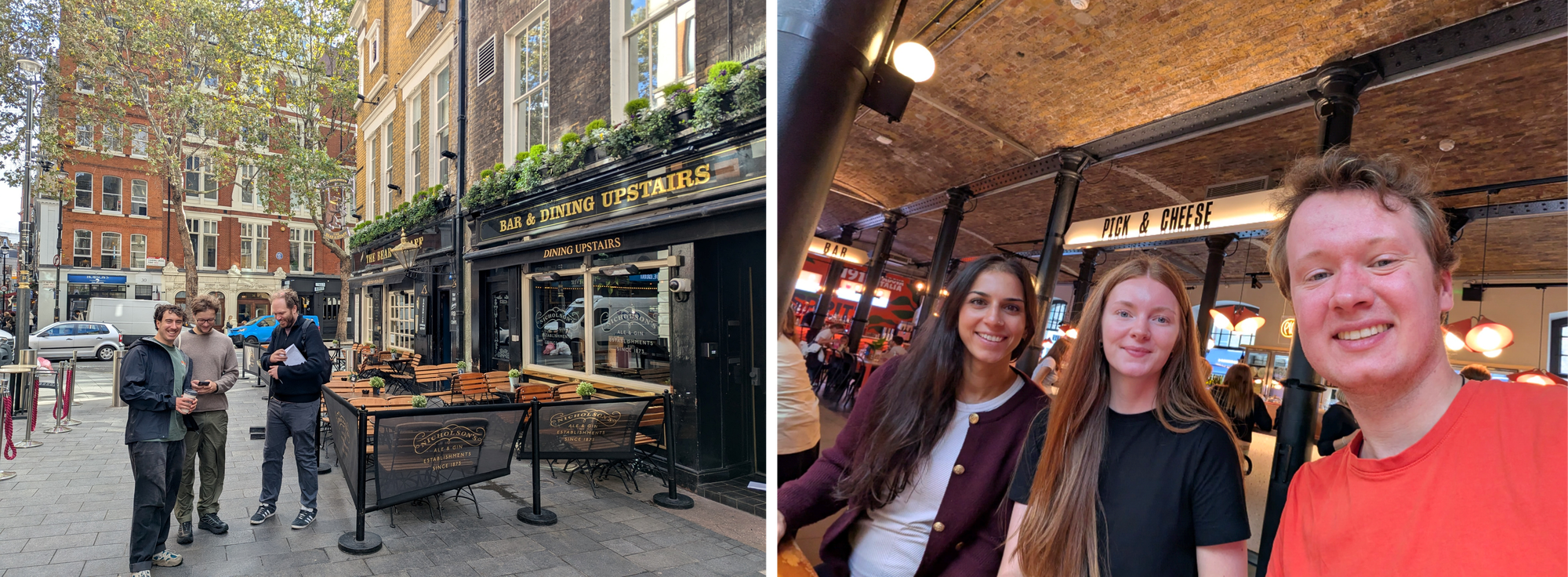
- A yearly Data Science Day where we head into a city in small teams to visit up to 20 stores within an industry and predict their sales, using only what the eye can see!
We like to add some friendly competition into the Data Science Day to make it more interesting, so it typically looks like this:
- A retailer is chosen with many stores so we can maximise the number of store visits within one day. So far, we have looked at coffee shops, grocery stores and hospitality venues across London – some within walking distance, some linked by tube journeys. Specific stores are chosen based on different fascias or location types.
- Split the team into groups of 3-4, each with a different starting point or route to follow around the city so they can discuss the observations without other teams hearing.
- The teams are tasked with ranking stores or predicting sales of each store, based on any factors they can observe – visibility, accessibility, attractiveness, footfall (care needed on this as it can be driven by the time of day), internal space, proximity to competitors/public transport, worker/residential location, etc.
- In the following Data Science Forum, the team reconvenes to discuss their observations and reasoning for their forecasts, as well as settle what is arguably the most important question for the competitive among us: which team performed the best?
The learnings we take from these collaborative days can then be used when building models, helping us to take data from a raw tabular format into real-world context and be able to better explain patterns observed in that data. Not only that, but it gives us a chance to spend time with other people in the team, which is not always possible with individual project work or working across multiple office locations - we usually mark the end of the day by coming together in a pub before getting trains home!
We always look forward to the next one, but the difficult questions are: which retailer should we pick, and should we branch out of London next time?
Author: Khrishina Bailey, Senior Data Scientist at GEOLYTIX